Rio Paragliding Safety Guide for First Flights

You do not need to be fearless to fly over Rio. You need the right system. A real rio paragliding safety guide is not about killing the thrill - it is about making sure the thrill is earned, controlled, and handled by professionals who respect the mountain, the wind, and your trust.
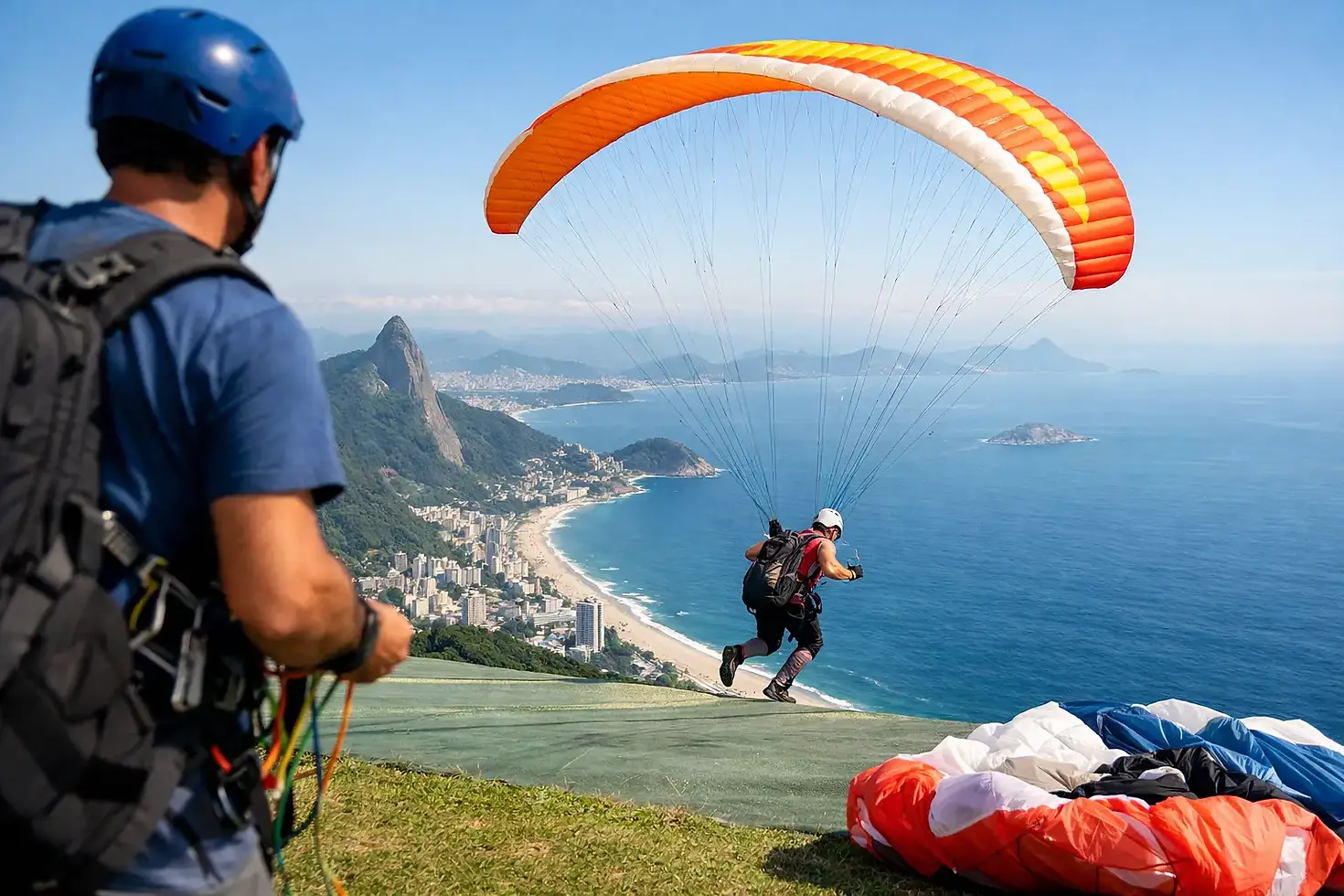
That matters in Rio more than most visitors realize. Pedra Bonita is one of the world’s great tandem flight sites, with a launch that delivers drama fast - jungle below, ocean ahead, the city spread out like a postcard with teeth. It is stunning, but it is still an active mountain environment. If you want the view of Christ the Redeemer, Sugarloaf, São Conrado, and the coastline without turning your vacation into a gamble, safety has to come first, not last.
What a real rio paragliding safety guide should cover
A serious operator does not sell courage alone. They sell judgment. Anyone can post a beautiful video. The real difference shows up before your feet leave the ground.
Start with pilot credentials and local experience. In tandem paragliding, the pilot is not just the person holding the brakes. They are reading micro-changes in wind, traffic in the air, launch rhythm, and landing conditions in real time. Rio is visually seductive, but that beauty can fool visitors into thinking every clear day is a flying day. It is not. A qualified local tandem pilot knows when conditions are ideal, when they are borderline, and when the correct answer is simply no.
That is the first trade-off worth understanding. The best flight operators are not the ones who promise takeoff at any cost. They are the ones willing to delay, reschedule, or cancel when the air says no. If a company sounds more committed to your booking than to the weather window, that is your warning sign.
Weather is not a detail - it is the whole game
Most first-time passengers worry about height. Experienced pilots worry about air movement. That is the right priority.
Paragliding safety in Rio depends heavily on wind direction, wind strength, thermal activity, visibility, and launch conditions at Pedra Bonita. A blue sky alone means very little. Conditions can look perfect from the beach and still be wrong for a clean, comfortable launch from the mountain.
Morning versus afternoon can matter. Seasonal variation can matter. Even a short delay can matter. Good operators monitor the forecast, but great ones combine forecast data with local site knowledge and live observation. That combination is where confidence comes from.
For you as a passenger, the smartest move is simple: do not push for a flight in doubtful conditions because your itinerary is tight. Build flexibility into your Rio schedule if this experience matters to you. Premium adventure is not about forcing the mountain to obey your calendar. It is about catching the right window and flying when the odds are in your favor.
The pilot matters more than the package
Luxury matters. Clear communication matters. Transfers, video, and concierge support matter. But if you strip everything away, your flight is only as strong as the pilot running it.
Ask direct questions. Is the pilot licensed for tandem operations? How much experience do they have flying from Pedra Bonita specifically? How do they handle weather calls? What does the pre-flight briefing include? What happens if conditions change after you arrive at launch?
A strong operator answers without flinching. Not with vague reassurance, but with specifics. You want calm authority, not sales smoke.
This is especially important for international travelers. Flying in a foreign country should not mean guessing your way through safety instructions. You should understand what will happen during gearing up, launch, flight posture, landing, and any pilot commands you may hear mid-flight. English support is not a luxury add-on here. It is part of risk reduction.
Gear checks are not glamorous, but they tell you everything
The wing gets the photos. The harness, helmet, carabiners, reserve system, and lines do the real work.
A proper tandem setup should be visibly well maintained and appropriate for commercial passenger operations. You are not expected to inspect technical certification labels like an engineer, but you should absolutely observe how the pilot treats the equipment. Do they perform checks methodically or casually? Do they explain the harness points and helmet fit? Do they verify your connection before launch with discipline?
The best pre-flight moments are usually quiet and precise. No rush. No chaos. No macho shortcuts.
If the process feels sloppy on the ground, do not expect excellence in the air. Safety culture is rarely hidden. It shows itself in body language, timing, and preparation.
Launch and landing are where first-timers need clarity
Most passengers imagine the scary part is being high above the city. In reality, launch and landing are the moments where attention matters most.
At Pedra Bonita, tandem paragliding launches are typically straightforward when conditions are right, but that does not mean passive. You need to listen, commit, and follow the pilot’s instruction exactly. Usually that means a controlled forward run during takeoff and a specific body position once airborne. Hesitation can complicate an otherwise clean start.
That is why briefing quality matters. A good pilot will not drown you in jargon. They will give you clear, memorable instructions and make sure you can actually repeat them back. You should know what to do with your feet, when to sit into the harness, and what to expect on landing.
Landing is usually gentler than most first-timers expect, but it still requires cooperation. Depending on wind and approach, the pilot may ask you to lift your legs or prepare for a few quick steps. This is normal. Confidence comes from knowing the plan before the final approach begins.
Weight, health, and honesty
A smart rio paragliding safety guide has to say this plainly: not every body and every condition fits every flight on every day.
Weight limits exist for performance and safety, not for marketing. Wind strength, pilot load range, and wing behavior all play into passenger suitability. Age minimums may be allowed, but maturity and ability to follow commands matter too. If you have heart issues, recent surgery, severe mobility limitations, or any medical condition that could affect takeoff, landing, or stress response, disclose it early.
This is not the moment to be brave in a reckless way. It is the moment to be accurate. The more honest you are, the better the operator can advise you.
For nervous flyers, fear alone does not usually rule you out. Many first-timers arrive with shaking hands and leave transformed. The key question is whether you can hear and follow instructions under pressure. Controlled nerves are fine. Refusal to cooperate at launch is not.
Safety and luxury should live together
There is a lazy idea in adventure tourism that premium service is separate from serious safety. In Rio, that is backward. The best experiences feel premium because they remove uncertainty.
Hotel-to-takeoff coordination reduces friction. Clear scheduling reduces stress. Thoughtful briefing in your language reduces mistakes. Weather monitoring protects the entire experience. Transparent rescheduling or refund policies protect your decision-making before the mountain forces a decision for you.
That is where a premium operator earns the price. Not with glossy promises, but with control, discipline, and clarity from pickup to landing. If a company can make you feel taken care of without making the flight feel casual, you are looking in the right direction.
QueroVoar.Net is built around that exact standard - high-impact flight, direct communication, and safety systems that respect the fact that this is not just sightseeing. It is a real airborne experience, and it should be handled like one.
How to judge your own readiness
If you want the cleanest possible first flight, prepare like someone who respects the experience. Wear secure shoes. Skip loose accessories. Eat light, but do not arrive dehydrated or running on nothing. Get enough sleep the night before. Show up with enough time that you are not emotionally sprinting before takeoff.
Then ask yourself one honest question: do you want a cheap story, or a great one?
A great flight in Rio is not built on bravado. It is built on the right pilot, the right weather call, the right gear, and your willingness to follow the process. That is what turns a high-adrenaline moment into something unforgettable for the right reasons.
Rio from the sky can feel bigger than language. The ocean, the cliffs, the city, the sudden silence after launch - it hits hard. And when the operation behind that moment is disciplined, the feeling is even stronger. You are not just chasing a rush. You are stepping into a rare kind of freedom, backed by people who know exactly what they are doing.
Choose that version of the experience. The brave move is not saying yes to any flight. The brave move is saying yes to the right one.


Comments