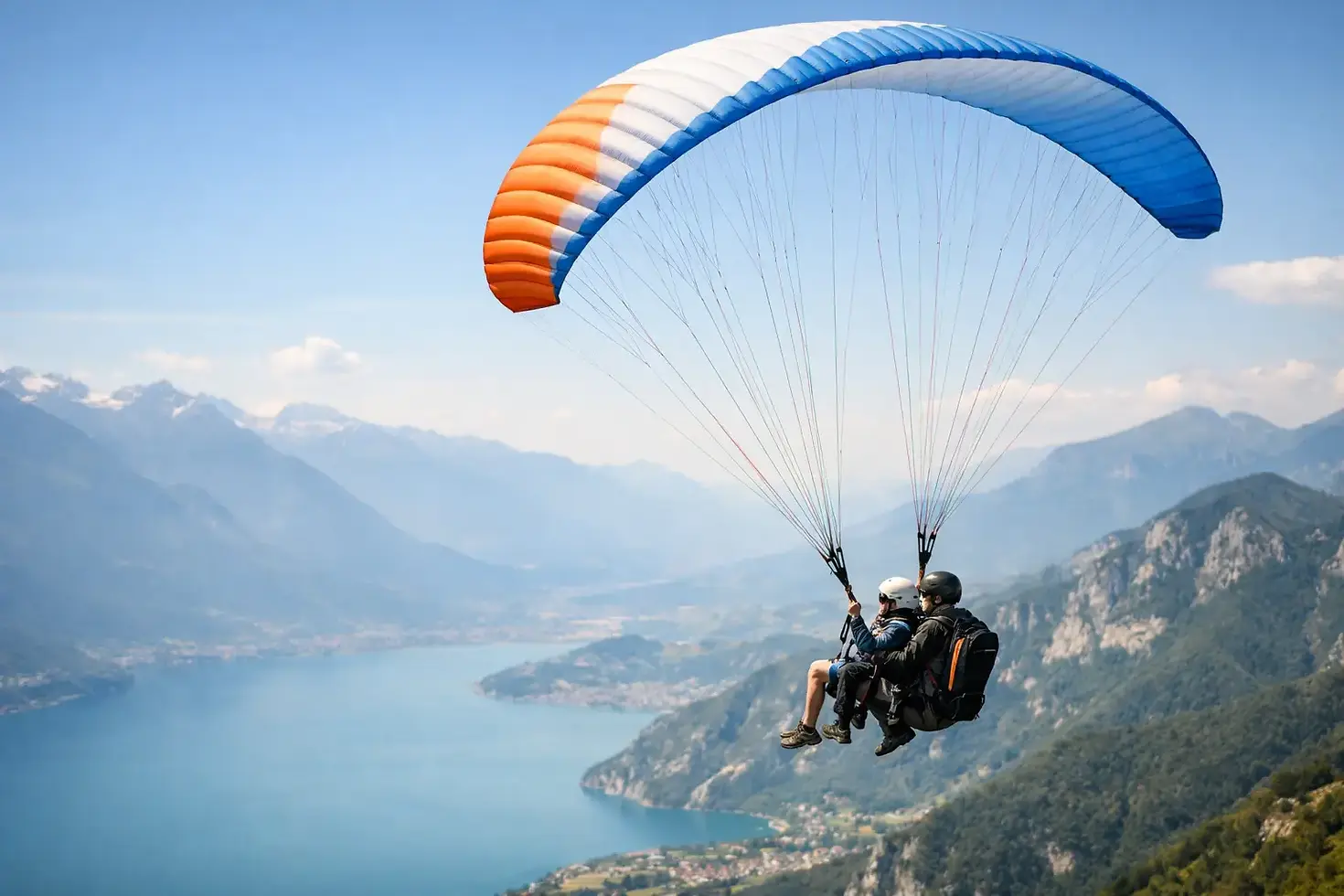
How Long Is Tandem Paragliding Flight?

You get strapped in, your heart starts pounding, Rio opens beneath your feet, and then the big question hits: how long is tandem paragliding flight really? Not the fantasy version. The real one. The honest answer is that most tandem paragliding flights last between 8 and 20 minutes in the air, but the final time depends on wind, thermal conditions, pilot decisions, and the launch site.
That range surprises people. Some expect a quick drop. Others imagine floating for half an hour no matter what. Neither is a smart expectation. A quality tandem flight is not measured only by minutes on a timer. It is measured by conditions, control, safety, and how much sky your pilot can actually work with on that day.
How long is tandem paragliding flight on average?
For most commercial tandem paragliding experiences, the airtime lands in the 8 to 20 minute window. In strong and favorable conditions, a skilled pilot may extend the flight by using lift to stay airborne longer. In softer conditions, the flight may be shorter because the priority is always a clean, safe, controlled route to landing.
That is how professional operators think. They do not promise a dramatic number just to make a booking. They read the air, assess the day, and fly the conditions they have, not the conditions they wish they had.
If you are flying from a famous coastal mountain launch such as Pedra Bonita in Rio de Janeiro, the duration can feel longer than the clock says because the visual impact is massive. You are not staring at empty sky. You are crossing above jungle, ocean, cliffs, neighborhoods, and some of the most iconic views in the world. Ten minutes there can feel bigger than half an hour doing something ordinary.
Why flight time changes from one day to another
Paragliding is not a roller coaster. It is not a fixed machine running on a set track. It is aviation. That means nature has a vote.
Wind and thermal lift matter most
When the air is active in the right way, your pilot can use rising currents to maintain altitude and stretch the experience. When the lift is weak or inconsistent, the flight becomes more direct. You still get the rush, the views, and the landing, but the airtime may be closer to the lower end of the range.
This is exactly why experienced operators monitor weather closely. Longer is not always better if the air is unstable. Good judgment beats a bold promise every time.
Passenger weight can influence performance
Weight affects wing loading and glide behavior. That does not mean heavier passengers get a bad experience. It simply means the glider may behave differently depending on the combined weight of the passenger and pilot, especially when conditions are light.
A professional team plans for this. They match equipment, timing, and pilot decisions to the day and the passenger profile.
Launch altitude and route also shape the flight
Some tandem flights are naturally shorter because the launch site has less vertical drop or a more direct landing path. Others offer more room to play with lift and contour lines. That is why comparing one location to another without context can be misleading.
A 12-minute flight over Rio can feel like a major life event. A 15-minute flight somewhere less dramatic may not hit the same way. Time matters, but quality of scenery and airspace matters too.
Airtime is only part of the experience
This is where many first-time travelers get it wrong. They ask only about the minutes in the sky and forget the full experience around it.
A premium tandem paragliding day usually includes check-in, ground transportation or meeting logistics, a safety briefing, equipment fitting, weather coordination, the launch window, the flight itself, and landing support. If media is included, there is also setup and file delivery. So while the actual airtime may be 8 to 20 minutes, the full adventure is much more than that.
And it should be. You are not buying a stopwatch result. You are buying a controlled adrenaline experience with expert support and a view most people only see from postcards.
What a shorter flight does not mean
A shorter tandem paragliding flight does not mean something went wrong. It does not mean your pilot rushed. It does not mean the operator gave you less than what you paid for.
Sometimes a clean 8 to 10 minute flight is the right flight. Safe launch. Beautiful line. Smooth landing. Strong visuals. Mission accomplished.
In fact, seasoned pilots know that forcing extra minutes can be the wrong move if the conditions do not support it. The best operators protect the experience by protecting the standards first.
That matters even more for travelers visiting a foreign destination. You want clear communication, sound judgment, and zero games with safety.
How it feels once you are in the air
Here is the truth people remember after landing: almost nobody says, "I wish I had spent the flight watching a timer."
They talk about the run off launch. The first second when their feet leave the ground. The silence after the initial rush. The way the coastline unfolds. The weird and beautiful moment when fear turns into focus, then freedom.
That emotional shift is the real luxury. It is not just that you flew. It is that you crossed a line inside yourself.
For many guests, the flight feels longer than expected because the senses are so switched on. Every second carries weight. Every turn has texture. The city looks different when you have earned the view.
If you want the longest flight possible, ask the right question
Do not ask for a guaranteed number that no honest pilot can promise. Ask how the operator handles weather, what the usual airtime range is, and whether the team prioritizes ideal conditions over pushing marginal ones.
That is the smarter question. It tells you if you are dealing with professionals or marketers.
If longer airtime is important to you, choose a day with flexible scheduling. Rigid travelers often end up disappointed because they only have one exact slot and the conditions may not be at their peak. Giving the operator room to work with the best launch window can improve the overall experience.
It also helps to choose a company that treats the flight as a premium operation, not a volume business. The difference shows up in everything: pre-flight communication, transfer support, multilingual guidance, media quality, and the pilot's confidence in the air. QueroVoar.Net is built around that standard.
How long is tandem paragliding flight compared to hang gliding?
People often compare the two. Tandem paragliding and tandem hang gliding can have similar duration ranges, but the feel is different.
Paragliding tends to feel softer, more suspended, and more fluid. Hang gliding often feels faster, more aerodynamic, and more like a true glide machine. On any given day, either one may last longer depending on conditions. The better choice is not always the one with the extra minute or two. It is the one that matches the sensation you want.
If you want a flight that feels scenic, floating, and visually expansive, paragliding is a powerful choice. If you want a stronger speed sensation and a more rigid-wing feel, hang gliding may speak to you more. Both deliver the bragging rights. Only one will match your style.
The best expectation to bring with you
Expect around 8 to 20 minutes in the air. Expect the full experience to take longer. Expect weather to matter. Expect professionals to give you the real answer instead of a sales answer.
Most of all, expect that the value of the flight will not come from the exact minute count. It will come from the moment your body says this is crazy and your mind answers yes, but I am doing it anyway.
That is why people book. That is why they land smiling, shaking, laughing, and asking for the video before they have fully processed what just happened.
If you are choosing a tandem paragliding experience in Rio, do not chase the biggest promise. Chase the right crew, the right mountain, and the right conditions. A great flight is not about staying in the air forever. It is about making every second up there unforgettable.


Comments